Can the Flaus Starter Kit Finally Make Flossing Tight Teeth Easier
Tight teeth can make daily flossing uncomfortable and frustrating. Discover how Flaus helps navigate narrow spaces and where its limitations matter.
All featured products are selected by our editors and may include affiliate links. If you purchase through these links, we may earn a commission.
If your teeth are close together, floss can appear hopelessly defiant. One second the strand won’t move, the next it’s going too fast and hitting your gums. This makes daily cleaning something to dread, especially near the back molars.
The Flaus Starter Kit promises to make those hard-to-reach spaces a little less like a battle. The vibrating handle and two floss head options sound nice, but tight contacts can be tough for any device. That's what its design, its real use, and its real costs show.
Why Flossing Closely Spaced Teeth Can Be So Frustrating
The small contact points leave little room for the floss to get between the teeth next to each other. Thick strands may fray and floss can snap painfully into the gums with too much pressure. Hitting a stubborn gap behind the molars adds another awkward angle.
There are people who notice that the floss snags on the same tooth every nite. That detail is important. It can be a rough restoration or a damaged tooth surface as well as naturally close spacing that can be a consistently problematic spot. A dentist can check it out before repeated pulling causes more discomfort.
The American Dental Association recommends that people clean between their teeth once a day, as toothbrushes can't reach these areas well enough. The best tool is the one you can use thoroughly without hurting your gums.
How the Flaus Starter Kit Helps Navigate Narrow Spaces
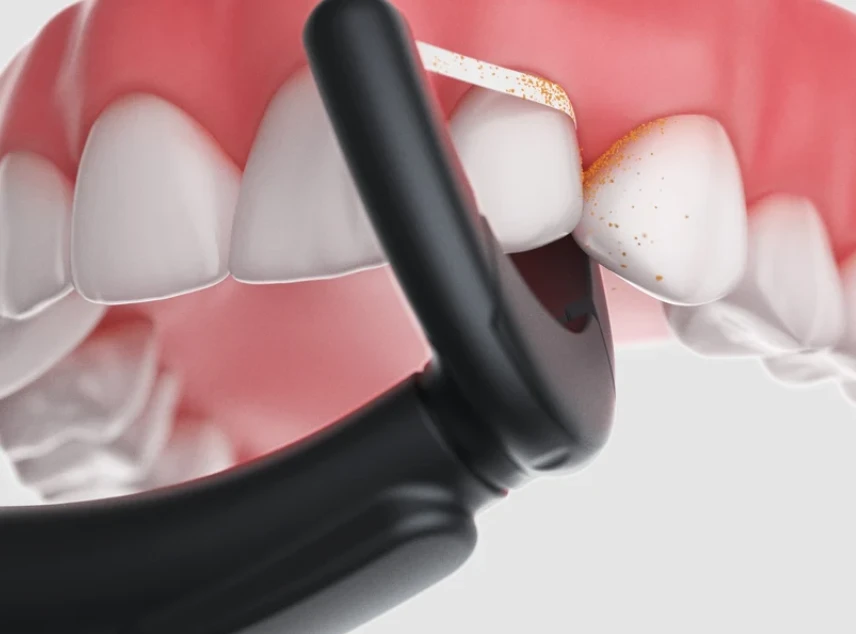
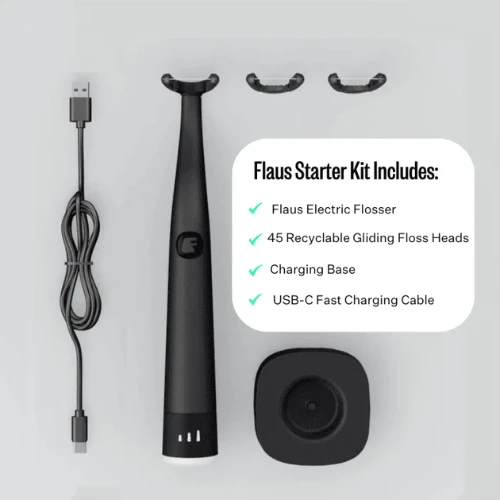
Flaus replaces finger-wrapped string with a soft-touch rechargeable handle and a mounted floss head. The kit includes 45 mint heads, a charging base, and a USB-C cable. Its waterproof body and advertised two-month battery life reduce the hassle of keeping another bathroom device ready. For tight teeth, the relevant feature is control. The handle gives you a steadier reach toward back molars, while a small strand between the head's prongs can be guided against each contact point.
How Sonic Movement Supports Gentler Flossing
The automatic flosser has three speeds, delivering 10,000, 14,000, or 18,000 vibrations per minute. That movement assists the strand as it approaches a tight gap, potentially reducing the urge to press harder.
Vibration does not substitute for careful cleaning. Still it has to curve around each tooth and move along its side once the strand has passed through it. But that outcome doesn’t prove every tight contact will be comfortable, Flaus says, citing a clinical study that found it removed more plaque than conventional floss under the tested conditions.
Which Flaus Heads May Work Better for Tight Teeth
The head choice deserves more thought than the vibration setting. Flaus offers Gentle Gliding Floss, a flat monofilament designed to slide through narrow contacts, and Extra Strong Woven Floss, which the company says is 200 percent stronger than its gliding option.
If the biggest problem is getting floss into the gap, then the smoother gliding type is a sensible starting point. If the strand goes through but tears regularly then it may be worth trying a woven floss, as long as it fits without forcing.
Here is the distinction that is easy to overlook. Breaking strength and ease of insertion are separate problems. Choosing the stronger head will not automatically solve a gap too narrow for its texture.
What to Know About Floss Breaking or Getting Stuck
Reddit experiences are mixed. In a DentalHygiene discussion about Flaus, a person with tight contacts said the device helped them to floss everyday. Another said she cycled through heads quickly, even after trying the stronger version.
Another Shark Tank discussion was that someone who initially used several heads per session because floss would get around their back teeth and then needed fewer as they learned the technique. These are anecdotal reports and not predictable outcomes but they show why replacement costs and a learning curve are worth paying attention to.
How to Use Flaus Comfortably Without Forcing the Floss
Sometimes the floss will catch easily so start off slow. The sequence below is more about control than about getting through the routine quickly.
- Start with an easy gap. Begin by flossing an easy contact and then move on to the stubborn back teeth.
- Try a lower vibration setting. Learn how the head responds, then adjust the speed if necessary.
- Rest the floss at the contact. Give the motion time to assist insertion instead of pushing sharply into the gums.
- Use the bite pad as directed. Flaus includes a pad to help control the head when entering and leaving tight spaces.
- Curve and clean. Guide the strand around both neighboring tooth surfaces rather than simply dipping it between them.
- Save the tightest gaps until last. A broken head will then interrupt less of your cleaning.
One useful habit is keeping track of exactly where floss snags. If a single spot repeatedly resists gentle cleaning or suddenly becomes painful, stop and have it checked. Persistently forcing a flossing machine into that gap is unlikely to help.
When the Flaus Starter Kit May Be Worth Trying
The strongest argument for Flaus is convenience. The handle assists those who don’t like wrapping string around their fingers or can’t reach their molars. If you skip flossing because it feels uncomfortable each time, flossing that is more manageable might make regular cleaning more realistic for you.
But still, is Flaus working for everyone who has close contacts? There is no machine that can promise that. Some Flaus reviews report welcome improvements, but others note fragile heads or continued difficulty in confined spaces. The value depends in part on how many heads you actually need.
There are three things to notice for a fair first month assessment: if difficult gaps become easier to reach, if you can clean each tooth properly and how many replacement heads you use. Only comfort can not tell you the plaque has been removed.
FAQs
Can Flaus Get Between Teeth That Ordinary Floss Cannot?
Sometimes its smooth strand and gliding movement may help. If floss does not slide through easily without a lot of force, ask a dentist to check the contact instead of pushing harder.
Do Stronger Floss Heads Prevent Every Break?
No. Woven heads are made for greater strength, but friction, tight restorations and technique can still break the strand. Replace any broken heads immediately.
Should You Reuse a Flaus Head?
Flaus recommends changing heads after each use. The American Dental Association also advises against reusing floss because worn material can fray and retain bacteria.
The Flaus Starter Kit offers a practical way to make flossing closely spaced teeth more manageable, particularly for people who struggle with traditional floss. Its sonic vibrations and specially designed floss heads can make daily cleaning more comfortable, although extremely tight spaces may still require patience and proper technique.
Check Flaus promo codes for current promotions and eligible savings.
Follow LeafySpark for independent health insights that help you make informed choices.